Pre-Winter Attic Ventilation Setup Eden Prairie MN
When temperatures in Eden Prairie start dropping and the first hard frost settles in overnight, most homeowners are thinking about furnace filters and weatherstripping. Attic ventilation rarely makes the list. That is a problem, because a ventilation system that works adequately in September can quietly fail under the weight of a Minnesota winter. Snow-loaded roofs, sustained sub-zero temperatures, and the constant freeze-thaw cycles that run through December and February create conditions that punish any setup that is even slightly off. Getting your attic ventilation confirmed and corrected before winter arrives is one of the highest-value maintenance steps you can take on a Minnesota home.
Why Pre-Winter Timing Matters for Eden Prairie Roofs
Eden Prairie sits in a climate zone that demands more from attic ventilation than most of the country. The metro area regularly sees overnight lows in the single digits from December through February, and snowfall totals can stack up quickly on a low-slope or shallow-pitch roof. When ventilation is insufficient, warm air from the living space rises into the attic unchecked, heats the roof deck, and melts the underside of snow. That meltwater runs toward the eaves, refreezes at the cold overhang, and builds into ice dams.
Ice dams are not just a surface inconvenience. They force water beneath shingles, saturate roof decking, and can send moisture into wall cavities and insulation. The damage from a single bad ice dam season often costs more to repair than a full ventilation system correction. Catching the problem in October is straightforward. Catching it in January, with two feet of snow on the roof and temperatures below zero, is a different situation entirely.
What a Pre-Winter Ventilation Inspection Actually Covers
A proper pre-winter inspection is not a visual scan from the driveway. Crews trained in attic systems work from inside and outside the home to verify that the full ventilation circuit is functional. Here is what that walkthrough typically includes.
- Soffit and intake vent clearance: Blown-in insulation frequently migrates over soffit baffles during the year. If intake vents are blocked, cold outside air cannot enter at the eaves, and the entire passive ventilation circuit stalls. Baffles need to be physically confirmed clear, not assumed.
- Ridge vent inspection: Ridge vents take weather exposure from every direction. Crews check for compressed baffling, debris that entered during fall windstorms, and any sections where the vent material has degraded. A ridge vent that is blocked at even one section reduces exhaust capacity across the whole ridge.
- Attic floor air sealing: Ventilation solves part of the ice dam equation, but the other part is preventing conditioned air from leaking into the attic in the first place. Light fixtures, ceiling penetrations, and attic hatches are common leak points. Sealing these before winter reduces the thermal load the ventilation system has to handle.
- Vapor and moisture signs: Staining on rafters, frost on the underside of decking, or any visible mold indicates that moisture has already been accumulating. These are not cosmetic issues. They signal that the ventilation balance has been off long enough to create real damage risk.
- Net free area calculation: The standard ratio for Minnesota residential construction is 1 square foot of net free ventilation area per 150 square feet of attic floor space when no vapor barrier is used at the ceiling. Many older Eden Prairie homes were built to minimum code and have little margin. If the attic has been re-insulated or modified, the vent ratios should be recalculated.
Passive vs. Mechanical Ventilation in Cold Climates
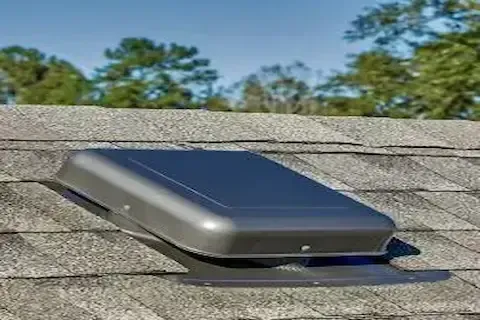
Most Eden Prairie homes use passive ridge-and-soffit ventilation, which relies on the stack effect and wind to move air through the attic. This system works well when it is properly balanced and unobstructed. Mechanical options, including powered attic ventilators and solar-powered fans, can supplement passive systems in structures where geometry or construction constraints make it difficult to achieve adequate net free area through passive means alone.
However, mechanical ventilation introduced without proper calculation can backfire. An oversized powered ventilator in an attic with insufficient soffit intake can depressurize the attic and pull conditioned air out of the living space, raising heating costs and increasing moisture risk rather than reducing it. If a mechanical solution is under consideration, it should follow a full assessment of the existing passive system, not replace that assessment.
For most standard residential construction in Eden Prairie, a well-maintained passive system sized correctly to the attic floor area is the right answer. The goal is consistent cold air circulation through the attic space so the roof deck temperature stays close to outside air temperature throughout the winter.
Common Setup Mistakes Crews Find Every Fall
After working on roofs across Eden Prairie and the surrounding southwest metro communities, the same issues come up repeatedly in pre-winter inspections. Insulation baffles that were installed but never secured properly are one of the most frequent findings. They shift over time and eventually collapse against the rafters, cutting off the intake airflow channel completely without any visible sign from the attic floor level.
Bathroom exhaust fans vented into the attic rather than through the roof are another consistent problem. This practice was common in older construction and is not permitted under current code. A bathroom fan dumping humid exhaust air directly into the attic all winter is one of the fastest ways to destroy roof decking and rafter structure. If you have an older home in Eden Prairie, confirming that all exhaust fans vent to the exterior before winter is worth the inspection time.
Reviewing the ice dam prevention walkthrough alongside the ventilation setup gives homeowners a complete picture of the connected systems that determine whether a roof makes it through a Minnesota winter without damage.
Scheduling and What to Expect
Pre-winter inspections for Eden Prairie homes typically run from late September through early November. Scheduling earlier in that window gives more time to address any corrections before the first significant snowfall. Soffit baffle corrections, air sealing at penetrations, and exhaust fan rerouting are all jobs that can be completed in a single visit for most standard residential structures.
Larger corrections, like adding ridge vent sections to a roof that relies entirely on static box vents, or reconfiguring a ventilation system after a major re-insulation project, may require a separate appointment. Getting the inspection done early means those corrections are not competing with emergency repair calls in December.
If you are ready to have your attic system reviewed before the season changes, Roof Ventilation & Attic Systems covers the full scope of what a pre-winter evaluation and correction involves for Eden Prairie residential roofs.
Making the Most of a Short Pre-Winter Window
Minnesota does not give homeowners much runway between comfortable working weather and conditions that make exterior roof work impractical. The window between the first hard frost and the first significant accumulation is typically four to six weeks in a normal year. Using that window to confirm attic ventilation is in proper shape, not just assumed to be fine, is one of the most cost-effective decisions you can make before a Minnesota winter settles in for good.
