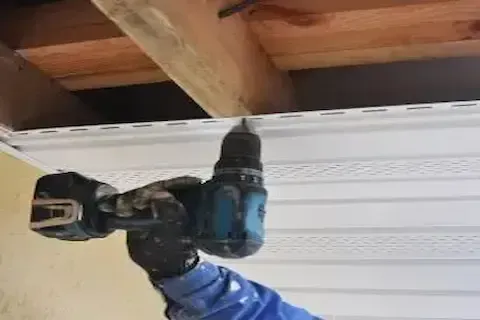
Rotted Soffit and Fascia Replacement Eden Prairie MN
Water is patient. It finds the smallest gap in your roofline, works its way behind the fascia board, and sits there through every freeze-thaw cycle Eden Prairie winters deliver. By the time you notice soft, discolored wood or paint bubbling along the eaves, rot has usually been spreading for months. Rotted soffit and fascia replacement is one of the more urgent repairs homeowners in this area face, because what starts as a cosmetic problem rarely stays that way.
Why Rot Spreads Faster Than Most Homeowners Expect
Wood rot is not a surface problem. Once fungal decay takes hold in a fascia board, it moves along the grain, tracking moisture deeper into adjacent framing. In Eden Prairie's climate, the cycle accelerates. Snow and ice accumulate along the eaves in winter, melt and refreeze, and that water has to go somewhere. When gutters pull slightly away from a deteriorating fascia, the gap behind them becomes a continuous soaking zone. The wood never fully dries out, and the rot advances through the season.
Soffit panels sit directly underneath the eaves and ventilate the attic space. When water migrates from the fascia into the soffit area, those panels swell, warp, or crack. Vinyl soffit handles moisture better than wood, but it still fails when the underlying structure is compromised. Beyond the structural issue, damaged soffit venting contributes to attic moisture problems, ice dam formation, and reduced insulation performance — all compounding costs for the homeowner.
How to Identify Rotted Soffit and Fascia Before It Gets Worse
You do not need to get on a ladder to begin your assessment. Walk the perimeter of your home during daylight and look for these signs from ground level:
- Paint peeling or bubbling on fascia boards, especially in isolated sections near downspouts or valleys
- Soft or sunken areas that appear slightly discolored compared to surrounding wood
- Sagging soffit panels or sections where panels have separated at the seam
- Gutter pulling away from the fascia line, leaving a visible gap
- Water stains running down the exterior wall below the roofline
- Pest activity near the eaves — squirrels and birds exploit any weakness in soffit panels to access attic space
If you can safely access the area with a ladder, pressing a screwdriver against the fascia board is a quick test. Sound wood resists firm pressure. Rotted wood compresses or crumbles. Any section that fails that test needs to come out.
What the Replacement Process Actually Involves
Replacing rotted soffit and fascia is not a simple paint-over job, and cutting corners here is how minor repairs become major structural problems. A proper replacement sequence follows a logical order that protects the work already done.
First, the gutters must come down along the affected sections. The fascia board cannot be removed cleanly while the gutter system is still attached. Once gutters are off, the full extent of the damage becomes visible, and in many Eden Prairie homes, that reveal is larger than what the initial inspection suggested.
Damaged fascia boards are removed and the underlying rafter tails are inspected. If rot has tracked into the rafter tails themselves, that framing needs to be addressed before new fascia goes up. Installing new boards over compromised rafter tails just resets the clock on the same problem.
New fascia boards — typically primed finger-jointed pine, cedar, or PVC trim board depending on the homeowner's preference and budget — are cut to length and secured directly to the rafter tails. For Soffit, Fascia & Drip Edge Replacement to hold up through Minnesota winters, every fastener point needs to be properly sealed to prevent future water infiltration at exactly the spots where it's most likely to enter.
Soffit panels are then reinstalled or replaced. Vented soffit panels must be positioned to restore airflow into the attic. Blocking attic ventilation during a repair — even accidentally — creates humidity and heat buildup that shortens shingle life and can lead to mold growth in the attic space.
Finally, gutters are rehung to the new fascia line, properly sloped for drainage and secured with appropriate hangers. This is also the right moment to check that gutter end caps and downspout connections are watertight.
Common Mistakes That Lead to Repeat Repairs
The most frequent mistake in rotted soffit and fascia repair is addressing only the visibly damaged section while leaving adjacent wood that is in early-stage decay. Within one or two seasons, the rot migrates into the new material from the boards on either side. A thorough repair extends a few feet past the visibly affected area to remove wood that tests soft or shows early discoloration.
The second common error is skipping the drip edge. Drip edge metal runs along the fascia and directs water away from the board's face and into the gutter. When drip edge is missing, damaged, or incorrectly lapped, water runs behind the fascia rather than into the gutter — which is frequently the original cause of the rot. Any soffit and fascia replacement that does not include an inspection and correction of the drip edge is an incomplete repair.
Using standard dimensional lumber without priming all four sides before installation is another mistake that shows up in DIY and low-quality contractor work alike. Unprimed cut ends absorb moisture immediately and begin the decay cycle before the job is even finished.
Eden Prairie Conditions That Make This Repair Time-Sensitive
Eden Prairie homeowners are dealing with a climate that accelerates wood deterioration along rooflines more than most parts of the country. The combination of heavy snowfall, repeated freeze-thaw cycles from November through March, and humid summers gives wood rot very little downtime to slow its progress. A section of fascia that looks manageable in October can be significantly worse by April after sitting under snow load and ice all winter.
Homes in areas of Eden Prairie near Purgatory Creek or along the wooded lots in the southwest part of the city tend to see faster moisture damage because of increased shade and reduced air circulation around the roofline. If your property has mature trees overhanging the eaves, debris accumulation in gutters is a contributing factor that needs to be managed alongside any repair work.
Before scheduling any repair, it is worth reading the soffit fascia and drip edge piece to understand how these components work together as a system — because replacing one without understanding its relationship to the others is what leads to recurring problems.
Making the Right Call on Materials and Timing
PVC trim board has become a popular choice for fascia replacement in Minnesota because it does not absorb moisture and will not rot under any conditions. The upfront cost is higher than primed wood, but it eliminates the maintenance cycle that wood fascia requires. For homeowners planning to stay in a home long-term, the total cost of ownership favors PVC in this climate.
Timing matters. Soffit and fascia repairs can be completed through most of the year, but waiting until visible rot is widespread means more rafter tail inspection and potentially more structural work. Catching damage early — even if it means scheduling a repair in spring before the problem grows — saves money and prevents collateral damage to attic insulation, interior ceilings, and wall framing below the eaves.
