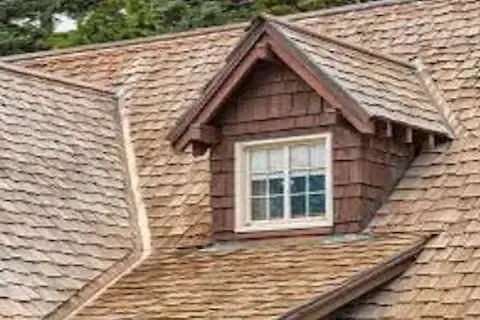
Cedar Shake or Composite Roof Picks Eden Prairie MN
When it's time to replace an aging roof in Eden Prairie, homeowners with shake-style homes face a choice that goes well beyond aesthetics. Natural cedar shake and composite synthetic shake both deliver the textured, dimensional look that suits the wooded neighborhoods and varied architectural styles common throughout Eden Prairie — but they behave very differently over a Minnesota roof's lifetime. Understanding the tradeoffs in lifespan, fire resistance, maintenance burden, HOA standing, and cost will help you make a decision you won't regret ten winters from now.
What Makes Cedar Shake Worth Considering
Genuine cedar shake has been used on homes across the upper Midwest for well over a century, and it earns that legacy. Cedar is a naturally insulating material, with air pockets in the wood grain that provide a measurable thermal barrier above your living space. In Eden Prairie's climate — where temperatures swing from -20°F in January to 95°F in July — that natural insulation matters. Cedar also breathes, allowing moisture to escape rather than trap, which can extend the roof assembly's performance when the shakes are installed correctly over a ventilated deck.
Aesthetically, nothing replicates the organic shadow lines and color variation of real wood. As cedar weathers, it moves through a warm honey tone before settling into a silver-gray that many homeowners in Eden Prairie's older established neighborhoods find highly desirable. If you're on a wooded lot near Purgatory Creek or in the Rice Marsh Lake area, a cedar roof can feel genuinely at home in the landscape.
The honest downside is maintenance. Cedar shake requires periodic treatment with preservatives, mold inhibitors, and UV stabilizers — typically every five to seven years. Moss and algae are real concerns in shaded yards. Individual shakes split, curl, and crack under freeze-thaw cycling, requiring ongoing inspection and spot replacement. A well-maintained cedar roof can last 25 to 35 years in Minnesota, but "well-maintained" is doing significant work in that sentence. For the full picture on how long real cedar actually lasts here, read our breakdown of cedar shake roof lifespan in Eden Prairie. Neglected cedar roofs fail much faster and can present fire risk as dry, weathered wood accumulates on the surface.
How Composite Synthetic Shake Performs Differently
Composite synthetic shake products have advanced substantially over the last decade. Today's high-quality synthetic shakes — manufactured from engineered polymers, recycled rubber, or fiber-reinforced resin — are designed specifically to address cedar's maintenance vulnerabilities while preserving its visual character. Manufacturers mold them from actual cedar shake profiles, so the shadow lines and surface texture are convincingly realistic from street level and even at close range.
The performance advantages are significant. Most premium composite shake products carry a Class A fire rating, which is the highest available and a meaningful upgrade over untreated natural cedar, which typically rates Class C or lower. For homeowners in Eden Prairie neighborhoods where homes sit close together or near dry vegetation, fire rating is not a trivial consideration. Many insurance carriers recognize Class A-rated roofing materials and reflect that in premiums.
Composite shakes are also manufactured to resist impact from hail, which matters considerably in Minnesota's active storm season. Products rated Class 4 for impact resistance are the strongest available under UL 2218 testing — a relevant standard for a region that sees significant hail events between May and September. Unlike real wood, synthetic shake won't absorb moisture, so it won't warp, crack, or support moss growth. Maintenance requirements are minimal: periodic cleaning and visual inspection are typically all that's needed.
Lifespan projections for quality composite products generally run 40 to 50 years with manufacturer warranties to match. That range exceeds cedar's realistic lifespan under Minnesota conditions, which can make the higher upfront cost easier to justify when you calculate cost per year of service.
Cost Per Square: What the Numbers Actually Look Like
Pricing in roofing is typically quoted per square, meaning per 100 square feet of roof surface. In the current Eden Prairie market, natural cedar shake installation runs roughly $600 to $900 per square installed, depending on shake grade, underlayment specification, and roof complexity. Premium hand-split shakes on a complex roof with multiple dormers will push the upper end of that range.
Composite synthetic shake typically runs $400 to $700 per square installed for mid-grade products, though premium brands with Class 4 impact ratings and 50-year warranties can reach $650 to $850 per square. The gap between the two materials has narrowed, and when you factor in the reduced maintenance cost and longer warranty period for composite, the lifetime economics often favor synthetic shake on a cost-per-year basis.
Neither material is inexpensive. Both represent a significant investment, and both are meaningfully more costly than standard architectural asphalt shingles. If the shake profile is what you want, budget accordingly and don't compromise on installation quality — both materials underperform when installation shortcuts are taken.
HOA Acceptance and Local Approval
Eden Prairie has a mix of neighborhoods governed by homeowner associations with varying levels of architectural control. If your home falls under HOA oversight, confirm material acceptance before you commit to either option. Some associations in Eden Prairie explicitly require natural wood shake to maintain neighborhood character; others have updated their guidelines to accept composite materials that replicate cedar's appearance. A few associations list approved products by brand and model number.
Getting HOA approval in writing before signing a roofing contract is essential. Discovering a material restriction after installation is an expensive and avoidable problem. A reputable local contractor will be familiar with common Eden Prairie HOA requirements and can help you navigate the approval process. For a full overview of what to expect during the full project, reviewing the cedar shake replacement walkthrough is a practical starting point before you meet with any contractor.
Which Material Fits Minnesota's Climate Better
Both materials can perform well in Minnesota when correctly specified and installed. The question is what "performing well" requires from you as the homeowner. Cedar demands engagement — you need to stay on top of treatment schedules and address small problems before they become large ones. If you're willing to invest in that ongoing relationship with your roof, cedar rewards you with a natural material that is genuinely beautiful and historically proven.
Composite shake suits homeowners who want the visual character of wood without the maintenance cycle. The freeze-thaw resistance, impact ratings, and fire performance of modern synthetic products align well with Minnesota's climate demands. You're trading the organic authenticity of real wood for durability, reduced upkeep, and stronger performance credentials.
Making the Right Call for Your Eden Prairie Home
There is no universally correct answer between cedar shake and composite synthetic shake. The right material depends on your home's architectural character, your HOA requirements, your tolerance for ongoing maintenance, and your budget over both the short and long term. What matters most is that you make the decision with full information and work with a contractor who has genuine experience installing both materials in Minnesota conditions.
If you're ready to explore your options with a contractor who knows Eden Prairie roofing from the ground up, Cedar Shake Roof Replacement services are available to help you evaluate the right approach for your specific home, including material selection, deck condition assessment, and accurate project pricing before work begins.
